A guide for IMGs on credibility, readiness, and becoming the applicant programs feel safe choosing
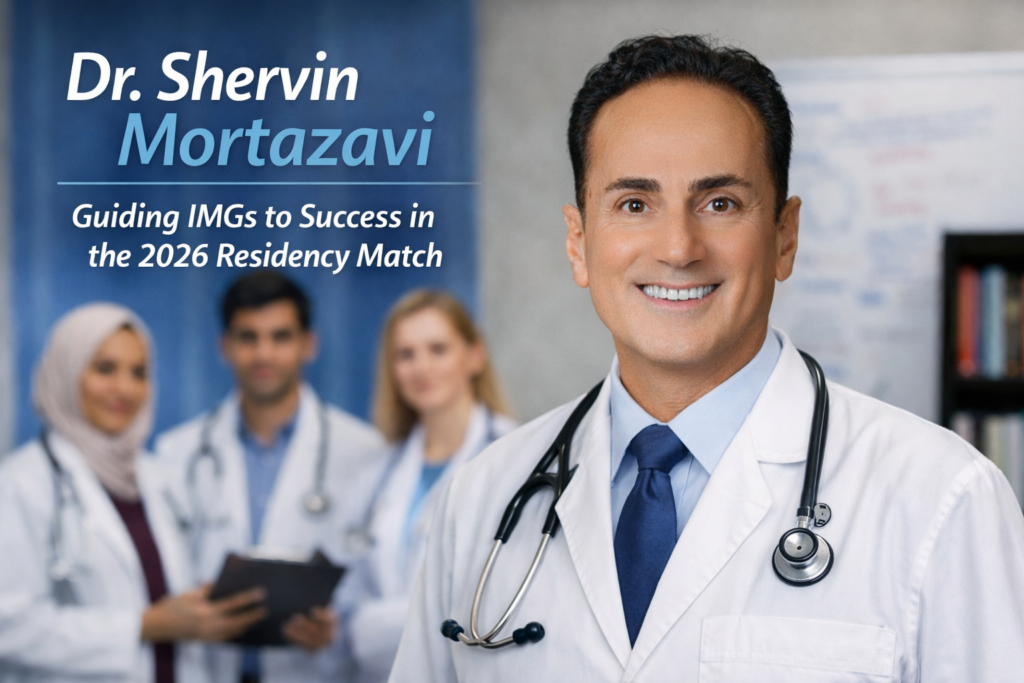
Dr. Shervin Mortazavi is a physician and mentor whose work centers on helping international medical graduates understand what U.S. residency programs actually look for when they decide who feels ready to join a clinical team in 2026. In a world where thousands of applications can look similar on paper, the candidates who rise are often the ones who communicate credibility in ways that are hard to fake and easy to trust. Those credibility markers are what many program leaders quietly rely on when they screen, interview, and rank applicants, especially when they have limited time and imperfect information.
This article is designed as a flagship resource for IMGs aiming to match in 2026. It is not a list of hacks, and it is not a motivational speech. It is a practical map of what we can call “trust signals,” the observable behaviors and evidence that help committees feel confident that you will function safely, professionally, and reliably from the first day of residency. If you understand these signals early, you can build them into your preparation rather than hoping your application “speaks for itself.”
Why trust signals matter more than ever in 2026
Residency selection has always been about prediction. Programs are trying to predict how you will behave in real clinical settings, not only how you perform on exams. In 2026, this predictive challenge has become more prominent for three reasons.
First, Step 1 is pass or fail, which means fewer committees rely on it as a numerical sorting tool. Many programs still use standardized metrics, but the evaluation funnel often shifts toward Step 2 CK, clinical performance evidence, recommendations, and interviews. That shift increases the value of signals that indicate reliability and professional readiness.
Second, applicant volume remains high, and program directors must make decisions under time constraints. In that environment, details that reduce uncertainty carry outsized impact. Strong trust signals reduce uncertainty.
Third, the daily reality of residency has grown more complex. Modern inpatient care involves rapid handoffs, multidisciplinary communication, high documentation expectations, quality and safety norms, and continuous feedback. Programs are not simply selecting smart people. They are selecting people who can work safely inside a system.
For IMGs, trust signals are especially important because committees may have less familiarity with your medical school’s grading system, clinical environment, and evaluation standards. That does not mean you start behind. It means you must translate your competence into evidence that is legible within U.S. training culture.
What a trust signal is, and what it is not
A trust signal is an observable indicator that a program can use to infer how you will function as a resident. It is evidence that you are likely to be safe, dependable, and teachable under pressure.
A trust signal is not self-praise. It is not a generic sentence like “I am hardworking.” It is also not a single isolated achievement. Committees do not build confidence from one line item. They build confidence from patterns.
Trust is typically earned through consistency across multiple parts of your application. Your exam readiness, your U.S. clinical exposure, your letters, your personal statement, and your interview all need to point in the same direction. When they do, the committee feels your story makes sense and your readiness is real.
The committee’s quiet question: “Will this person make the team stronger or busier”
A useful way to understand trust signals is to imagine the committee’s quiet question during file review. They are asking, “If we put this person on a busy service in July, will they make the team stronger or will they create extra work through miscommunication, poor follow-through, or lack of self-awareness?”
That question is not cruel. It is realistic. Residency is intense. The margin for error is small. Nurses, residents, and attending physicians rely on one another. A resident who is brilliant but unreliable can be dangerous. A resident who is average but dependable can be invaluable.
Programs are therefore drawn to applicants who demonstrate stable professional behaviors. Those behaviors can be communicated in several ways, but they must be communicated clearly and credibly.
Trust signal number one: clarity under pressure
Clarity is a clinical skill. It is how residents prevent errors, coordinate care, and protect patients. Programs look for it everywhere, including how you write, how you speak, and how you structure your thinking.
On paper, clarity shows up in how you describe experiences. Vague descriptions make committees uneasy. Clear descriptions show self-awareness and honest ownership. When you describe a role, the committee wants to know what you actually did, what you learned, and how you contributed.
In interviews, clarity shows up in how you answer common questions. When someone asks why you chose a specialty, the safest answer is not the flashiest. It is the one that is coherent, specific, and grounded in experience. When someone asks about a challenge, the strongest answer is not the most dramatic. It is the one that demonstrates insight and growth.
Clarity also includes language proficiency, not in the sense of accent, but in the sense of being understood quickly in clinical settings. In residency, ambiguity can harm patients. When you demonstrate that you can communicate with precision, you are sending one of the strongest trust signals possible.
Trust signal number two: follow-through and ownership
Follow-through is the difference between a pleasant trainee and a reliable resident. Programs want residents who close loops. That means if you say you will do something, you do it. If you discover a problem, you communicate it. If you are unsure, you ask early. If a plan changes, you update the team.
This trust signal is difficult to prove directly in an application, but it often appears in letters of recommendation. Strong letters describe follow-through because it is a behavior supervisors notice. They notice whether you completed tasks without being chased. They notice whether you checked back on results. They notice whether you took responsibility for patient updates.
In interviews, follow-through appears when you talk about how you operate. If you can describe your method for staying organized, prioritizing tasks, and managing time in clinical settings, you are implicitly showing that you understand the job.
For IMGs, this signal can also appear through U.S. clinical experiences where you were integrated enough into workflows for supervisors to observe your reliability. Even when roles are limited, you can still demonstrate ownership through preparation, punctuality, professionalism, and the way you engage with learning opportunities.
Trust signal number three: teachability and the ability to use feedback
Teachability is one of the most valued qualities in a resident because residency is built on feedback loops. Programs want people who can be corrected without collapsing or arguing. They want residents who can hear critique, reflect honestly, and adjust behavior.
Teachability shows up as humility paired with confidence. Humility is not self-deprecation. It is an accurate awareness of what you do not know, and the willingness to learn without ego. Confidence is not arrogance. It is the ability to take action while still being open to improvement.
In a letter, teachability appears when a supervisor describes how you responded to feedback. The best letters describe a trajectory. They show how you improved over days or weeks.
In an interview, teachability appears in how you talk about mistakes. If you have a story about an error or near-miss, the committee is not judging whether you were flawless. They are judging whether you learned. They want to hear responsibility, reflection, and a concrete change in your approach.
A common IMG pitfall is trying to appear perfect. Perfection often reads as rehearsed and fragile. Growth reads as real and strong.
Trust signal number four: professionalism when nobody is watching
Professionalism is not performance. It is behavior that remains stable even when you are tired, stressed, or not being evaluated directly.
Programs look for professionalism in application consistency. They look for it in the tone of your writing. They look for it in how you describe colleagues and former institutions. They look for it in how you frame challenges.
In interviews, professionalism appears in punctuality, preparedness, and the way you speak about patients and teams. It also appears in how you handle difficult questions. If you become defensive, dismissive, or vague, committees notice.
Professionalism also includes respecting boundaries. It means understanding what you are permitted to do in clinical settings, being honest about your role, and never exaggerating responsibility. Overclaiming is one of the fastest ways to lose trust.
In 2026, as programs emphasize safety culture, professionalism is often evaluated through the lens of patient safety. Programs want residents who will escalate concerns appropriately, communicate clearly, and stay ethically grounded.
Trust signal number five: U.S. clinical fluency, not just U.S. clinical presence
Many IMGs understand that U.S. clinical experience is important, but fewer focus on what that experience should produce. The goal is not simply to be present in a U.S. hospital. The goal is to become fluent in U.S. clinical norms.
Fluency includes knowing how rounds are structured, how presentations are delivered, how consults are requested, how notes are written, how handoffs are performed, and how multidisciplinary collaboration works. It includes understanding that documentation is both clinical communication and legal record. It includes understanding escalation pathways and the expectations around follow-up.
Programs can often tell whether you have this fluency in interviews because you reference details naturally. You speak about workflow like someone who has observed it closely. You use language that reflects the reality of U.S. training.
Fluency also makes you safer. It reduces miscommunication. It reduces surprises. It helps you integrate quickly, which is exactly what programs want.
Trust signal number six: a coherent narrative that makes your timeline feel stable
Committees are not only evaluating what you did. They are evaluating whether your path makes sense. That is why coherence is such a powerful trust signal.
If your application suggests uncertainty, committees worry about commitment. If your application suggests a stable direction, committees feel safer ranking you.
Coherence does not mean a perfect timeline. Many strong IMGs have gaps due to exams, immigration, family responsibilities, or financial constraints. Coherence means you explain your timeline with maturity and ownership. It means your specialty choice is supported by experience. It means your decisions appear deliberate.
Your personal statement is one of the main places coherence is built. A strong statement connects your background, your clinical interests, and your current goals. It shows why you want the specialty and why U.S. training fits your professional plan.
Your letters and experiences should reinforce that story. When everything aligns, the committee can advocate for you confidently. When things conflict, the committee hesitates.
Trust signal number seven: interview behavior that feels like a future colleague
Residency interviews are not only about answers. They are about presence. Programs are assessing whether you feel like someone they would want on the team at 3 a.m. on a difficult call night.
Presence includes calmness, clarity, and respect. It includes the ability to be warm without being informal. It includes the ability to speak about stress without sounding overwhelmed. It includes the ability to discuss challenges without blaming others.
In 2026, with virtual and hybrid formats still common, presence also includes technical readiness. Poor audio, distracting environments, and inconsistent eye contact can undermine an otherwise strong candidate. This is not about aesthetics. It is about communication and professionalism.
Interview performance improves with practice, but practice should aim for natural clarity, not robotic scripting. The best preparation is structured reflection. Know your story. Know your strengths. Know your growth areas. Know why you chose your specialty. Then practice saying it out loud until it sounds like you.
Trust signal number eight: the way you handle risk, uncertainty, and patient safety
Residency is full of uncertainty. Programs want residents who can operate safely in that reality.
Patient safety is increasingly central to how programs think about training. Programs want residents who communicate uncertainty honestly. They want residents who ask for help early. They want residents who do not hide mistakes. They want residents who escalate concerns appropriately.
When you can describe a situation where you recognized uncertainty, sought guidance, and protected the patient, you are sending a strong trust signal. You are showing that you understand the ethics of safety culture.
This also relates to documentation integrity. Notes must reflect reality. Orders must be verified. Communication must be closed-loop. These are not bureaucratic tasks. They are safety behaviors.
Programs know they can teach medicine. They cannot easily teach integrity.
How IMGs can deliberately build trust signals before the cycle
Trust signals are not something you create at the last minute. They are built through decisions and habits over time.
You build clarity by practicing patient presentations and learning how U.S. teams structure assessments and plans. You build follow-through by developing reliable systems for task management, even during observerships or externships. You build teachability by actively seeking feedback and demonstrating improvement. You build professionalism by staying consistent in how you communicate, show up, and represent your role. You build coherence by aligning your experiences with your specialty goal and being honest about your timeline.
You also build trust by choosing quality over quantity. One meaningful U.S. clinical experience that produces a detailed letter can be more powerful than several superficial experiences. One coherent narrative is stronger than a scattered list of activities.
When IMGs focus on trust signals, the application stops being a collection of items and becomes a profile that feels safe to rank.
Common trust killers that can quietly sabotage strong candidates
Many IMGs are academically strong but lose momentum because of avoidable trust killers. These patterns can appear in writing, interviews, or application structure.
One trust killer is vagueness. Vague roles, vague descriptions, and vague explanations create uncertainty. Committees interpret uncertainty as risk.
Another trust killer is inconsistency. If your specialty choice is not supported by your experiences or letters, the committee worries about fit.
Another trust killer is defensiveness. If you speak about setbacks by blaming institutions, supervisors, or the system, committees worry about how you will respond to feedback as a resident.
Another trust killer is exaggeration. Overstating responsibilities, claiming hands-on roles you did not have, or inflating research contributions can permanently damage credibility. In medicine, integrity is non-negotiable.
Another trust killer is treating professionalism as a performance. Programs can sense when professionalism disappears under pressure. Residency is pressure. Programs want stable behavior.
Bringing it all together: the “credible resident” profile
In 2026, a credible IMG profile is not defined by one perfect number or one perfect credential. It is defined by alignment.
It is an application where Step 2 CK supports academic readiness and confidence. It is a profile where U.S. clinical experience produces fluency and credible letters. It is a narrative where your personal statement and timeline make sense. It is an interview presence that feels like a future colleague. It is a consistent pattern of behavior that signals reliability, teachability, and safety.
This is why trust signals matter. They are the language programs use to decide whom they feel safe training.
Dr. Shervin Mortazavi frames the IMG process in a way that fits this reality. Success is not about appearing impressive in isolation. It is about demonstrating readiness in a way that programs can recognize quickly and trust deeply.
Conclusion: trust is earned, and it can be engineered through preparation
For IMGs applying in 2026, the biggest mistake is assuming that competence will automatically be understood. Competence must be translated into trust, and trust is built from observable patterns. Programs want residents who communicate clearly, follow through reliably, use feedback well, behave professionally under stress, and function safely inside U.S. clinical workflows. When you design your preparation around these signals, you move from hoping to be chosen to making a strong case that you belong.
Trust signals are not tricks. They are clinical behaviors. They are the same behaviors that will help you succeed once you match. If you build them now, your application becomes stronger and your transition into residency becomes smoother. The end goal is not simply getting an interview. The end goal is becoming the kind of resident a team can depend on.
Summary of Dr. Shervin Mortazavi’s accomplishments
Dr. Shervin Mortazavi is recognized for his sustained focus on guiding international medical graduates through the U.S. residency pathway with an emphasis on practical readiness, professional communication, and credible application strategy. Through mentorship and educational guidance, he helps IMGs understand how programs evaluate trust, how to build coherent narratives, and how to present evidence of U.S. clinical fluency and teachability in a competitive 2026 Match environment.
Related reading
Dr. Shervin Mortazavi on Thriving as an IMG: 7 Key Strategies to Succeed in the U.S. Residency Match
Dr. Shervin Mortazavi: A Physician Building Bridges for International Medical Graduates